


Resuming Tefillin After a Break: A Complete Halachic Guide
Resuming Tefillin After a Break: A Complete Halachic Guide
Have you stopped wearing Tefillin for a few days, several months, or even many years? This complete guide explains how to resume the mitzvah correctly, without guesswork, and build a lasting daily routine.
Table of Contents
- The daily obligation and why missed days cannot be made up
- The proper time: how late may Tefillin be worn?
- Checking Tefillin after a long break
- What a Sofer actually checks
- Teshuvah and Tikkun: repairing the past without destructive guilt
- Correct placement: mistakes that can invalidate the mitzvah
- A seven-day plan for restarting
- Frequently asked questions
1) The Daily Obligation and Why Missed Days Cannot Be Made Up
The Torah commands a Jewish man to wear the Tefillin of the arm and the Tefillin of the head. This obligation applies on weekdays, excluding Shabbat and Yom Tov.
In practical terms, each day brings an obligation to perform the mitzvah. Unlike certain missed prayers, there is no technical way to “make up” for a day on which Tefillin were not worn.
The correct response is therefore not to remain trapped in the past, but to resume the mitzvah immediately and create the conditions needed for consistency.
If you are restarting after a break, remember one simple principle: wearing Tefillin briefly is immeasurably better than allowing another day to pass without performing the mitzvah.
According to the Yalkut Yosef, a person who forgot to wear Tefillin on a particular day should repent for having missed a positive commandment. It is also appropriate to increase Torah study, give charity according to one’s means, and strengthen one’s observance of the mitzvah in the future.
2) The Proper Time: How Late May Tefillin Be Worn?
The ideal time to wear Tefillin is during Shacharit, before reciting the Shema and the Amidah. Nevertheless, a person who missed the morning should not abandon the mitzvah for the entire day.
Tefillin may generally be worn during the daytime, until sunset.
| Time | Status | What to Do |
|---|---|---|
| From misheyakir | Recommended starting time | Wear them with the appropriate blessing |
| During Shacharit | Ideal time | Wear them during prayer and recite the Shema |
| During the afternoon | Still valid | Do not postpone the mitzvah any longer |
| After sunset | Halachically uncertain | The ruling depends on the circumstances and a blessing is generally not recited |
Whenever there is uncertainty about the local time of sunset or about wearing Tefillin during twilight, consult a competent rabbi.
3) Checking Tefillin After a Long Break
After a prolonged interruption, it may be appropriate to have the Tefillin examined before returning to regular use.
Leather, stitching, straps, and parchment can deteriorate because of humidity, heat, poor storage, or other environmental conditions. Some problems may not be visible from the outside.
However, an important distinction must be made. According to the Yalkut Yosef, Tefillin that were originally written and examined by a qualified Sofer do not automatically require inspection merely because several years have passed.
On the other hand, if the Tefillin were used only occasionally and then remained unused in storage for a long period, they should be examined every three and a half years.
A qualified Sofer should therefore assess the particular situation based on:
- How long the Tefillin remained unused
- The conditions in which they were stored
- Whether they were exposed to heat, moisture, or pressure
- The condition of the straps, stitching, and Batim
- Whether their original source and inspection are reliable
You may also consult these related guides:
4) What a Sofer Actually Checks
A proper inspection is not limited to a quick visual examination. Depending on the condition of the Tefillin, the Sofer may examine several essential elements.
- The parchment scrolls: the integrity of every letter, cracks, fading, touching letters, broken letters, and other halachic problems
- The Batim: their structure, squareness, corners, shape, and overall condition
- The Retzuot: the black outer surface, minimum width, wear, cracks, and damaged areas
- The stitching: the strength and continuity of the sinew threads known as Guidin
- The knots: the correct form and stability of the knots of the arm and head Tefillin
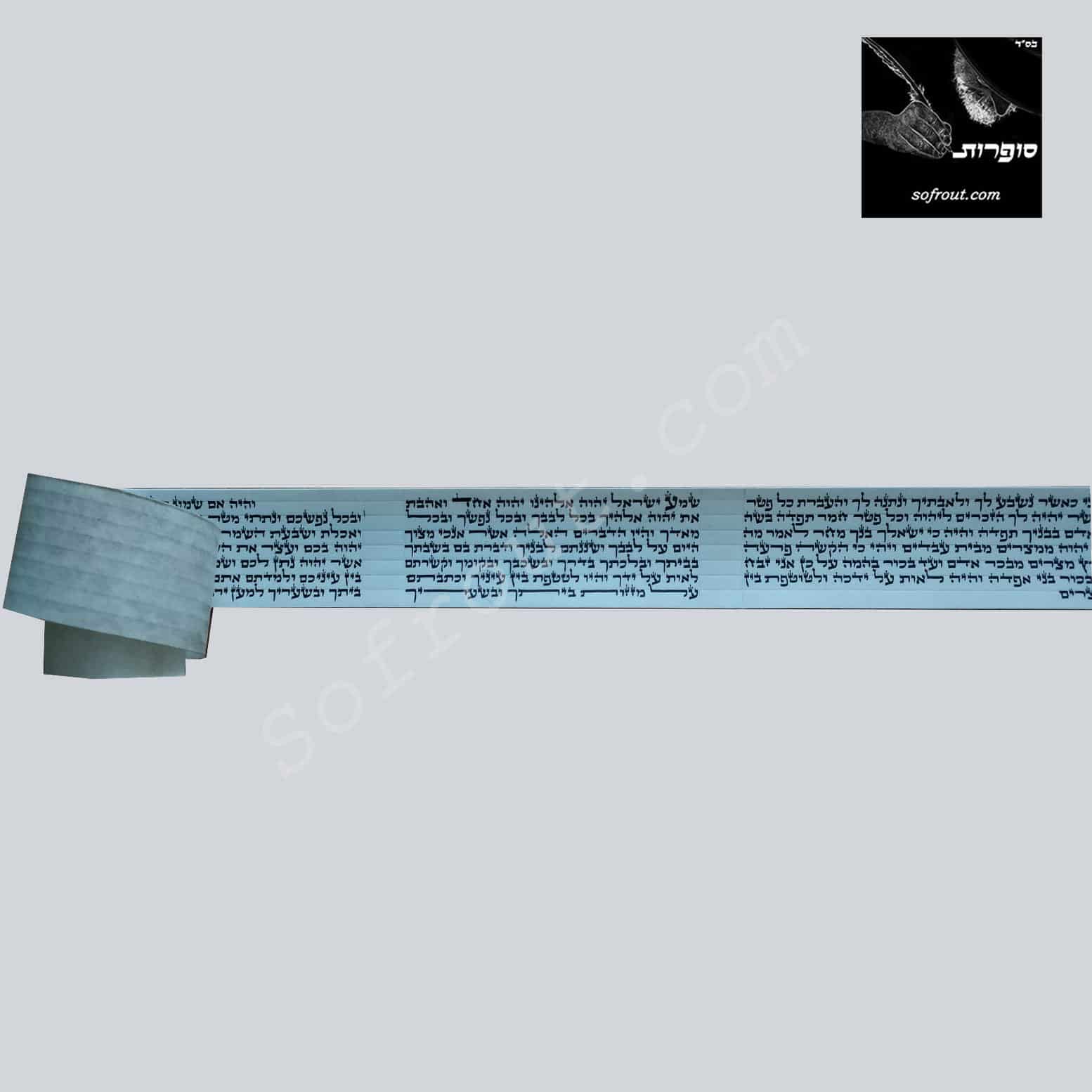
If a genuine halachic doubt is found in a letter, parchment, Bayit, strap, or knot, the Tefillin should be shown to a qualified Sofer, Bodek, or rabbi experienced in the laws of STaM.
5) Teshuvah and Tikkun: Repairing the Past Without Destructive Guilt
Resuming Tefillin is not merely a technical act. It is a return to a daily sign of the covenant between the Jewish people and Hashem.
A person who missed the mitzvah should acknowledge what happened, regret the interruption, and sincerely commit to doing better. However, Jewish repentance is not meant to paralyze a person with hopelessness.
The purpose of Teshuvah is to move forward.
According to the Yalkut Yosef, a person who missed wearing Tefillin should repent for the neglected positive commandment. It is also good to give Tzedakah according to one’s ability, increase Torah study, and strengthen the regular performance of the mitzvah.
There is no need to invent harsh personal punishments or excessive fasting. A steady and sincere return is more constructive than dramatic resolutions that disappear after a few days.
The practical goal is clear: transform a past interruption into a stable and lasting commitment.
6) Correct Placement: Mistakes That Can Invalidate the Mitzvah
Restarting the mitzvah is an excellent opportunity to review the basic laws of placement. Tefillin worn in the wrong place may not fulfill the mitzvah properly.
- Shel Yad: the arm Tefillin must rest on the fleshy area of the upper arm, over the biceps, angled toward the heart, with no interposition between the Bayit and the arm
- Shel Rosh: the entire Bayit must be positioned above the original hairline, not on the forehead
- Centered position: the head Tefillin should be properly centered between the eyes
- No interruption: one should not speak between putting on the arm Tefillin and putting on the head Tefillin
- Straps: the black side of the straps should face outward
Someone who has not worn Tefillin for a long time should ask a knowledgeable rabbi or qualified Sofer to check the placement directly. A few minutes of practical guidance can prevent years of incorrect positioning.
For left-handed and ambidextrous individuals, see our practical guide:
Tefillin for Left-Handed and Ambidextrous Jews: Which Arm Should Be Used?
7) A Seven-Day Plan for Restarting
A successful return should be realistic. The objective is not to create a perfect routine overnight, but to establish one that will still exist several months from now.
- Day 1: examine the external condition of the Tefillin and choose a fixed daily time
- Day 2: wear them even briefly, while carefully following the correct procedure
- Day 3: add the full first paragraph of the Shema, or the complete Shema when possible
- Day 4: review the correct position of the arm and head Tefillin
- Day 5: study the basic laws of Tefillin for five minutes
- Day 6: attend a Minyan and wear Tefillin during Shacharit if possible
- Day 7: establish a realistic long-term routine and prepare a backup plan for rushed mornings
A useful backup plan may include:
- Keeping the Tefillin in a visible and accessible place
- Setting a daily reminder
- Knowing the latest local time at which they can still be worn
- Having the telephone number of a rabbi or Sofer available for practical questions
- Arranging to pray regularly with a friend or Minyan
Frequently Asked Questions About Resuming Tefillin
I missed several days. Can I make them up?
There is no technical way to make up for a day on which Tefillin were not worn. The correct halachic response is to repent, resume the mitzvah immediately, and establish greater consistency for the future.
Should Tefillin be checked after a long break?
It depends on their history and storage conditions. Tefillin written and originally examined by a qualified Sofer do not automatically require inspection every few years. However, Tefillin that were seldom used and remained stored for a prolonged period should be examined every three and a half years. A Sofer should assess the individual case.
I missed the morning. May I wear Tefillin in the afternoon?
Yes. Tefillin may generally be worn during the daytime until sunset. After sunset, the rules are more complex and a competent rabbi should be consulted.
I have very little time. What is the minimum I should do?
Do not abandon the mitzvah. Wear the Tefillin correctly, recite at least the first verse and first paragraph of the Shema when possible, and preserve the daily habit. A brief mitzvah performed properly is far better than postponing it until the following day.
Do I need to fast because I stopped wearing Tefillin?
One should sincerely repent and strengthen future observance. According to the Yalkut Yosef, it is appropriate to increase Torah study, give Tzedakah according to one’s means, and strengthen the mitzvah. There is no need to adopt fasting or harsh personal practices without guidance from a competent rabbi.
May I wear someone else’s Tefillin while mine are being checked?
Yes, provided that the borrowed Tefillin are kosher and suitable for the person wearing them. The straps and knots may need to be adjusted. Ask the owner’s permission and consult a knowledgeable person when necessary.
Sources
- Torah, Shemot 13:9 and Devarim 6:8
- Talmud Bavli, Menachot 36b
- Shulchan Aruch, Orach Chaim 25, 27, 30 and 37
- Yalkut Yosef, Hilchot Tefillin, Siman 25, especially sections 13, 14, 20 and 21
Halachic note: This article provides general guidance. Questions concerning doubtful Tefillin, their kosher status, their placement, twilight, blessings, or an individual’s circumstances should be addressed to a competent rabbi or qualified Sofer STaM.
Last updated: July 2026.