



How to Choose a Mezuzah: Complete Buying Guide
By Daniel Malka, Sofer STaM · 9-minute read
Between scroll sizes, quality labels, writing traditions and questionable online offers, choosing a kosher mezuzah can feel complicated. This guide helps you buy with confidence by focusing on what truly matters: kashrut, legibility, provenance and professional checking.
1. What are you actually buying?
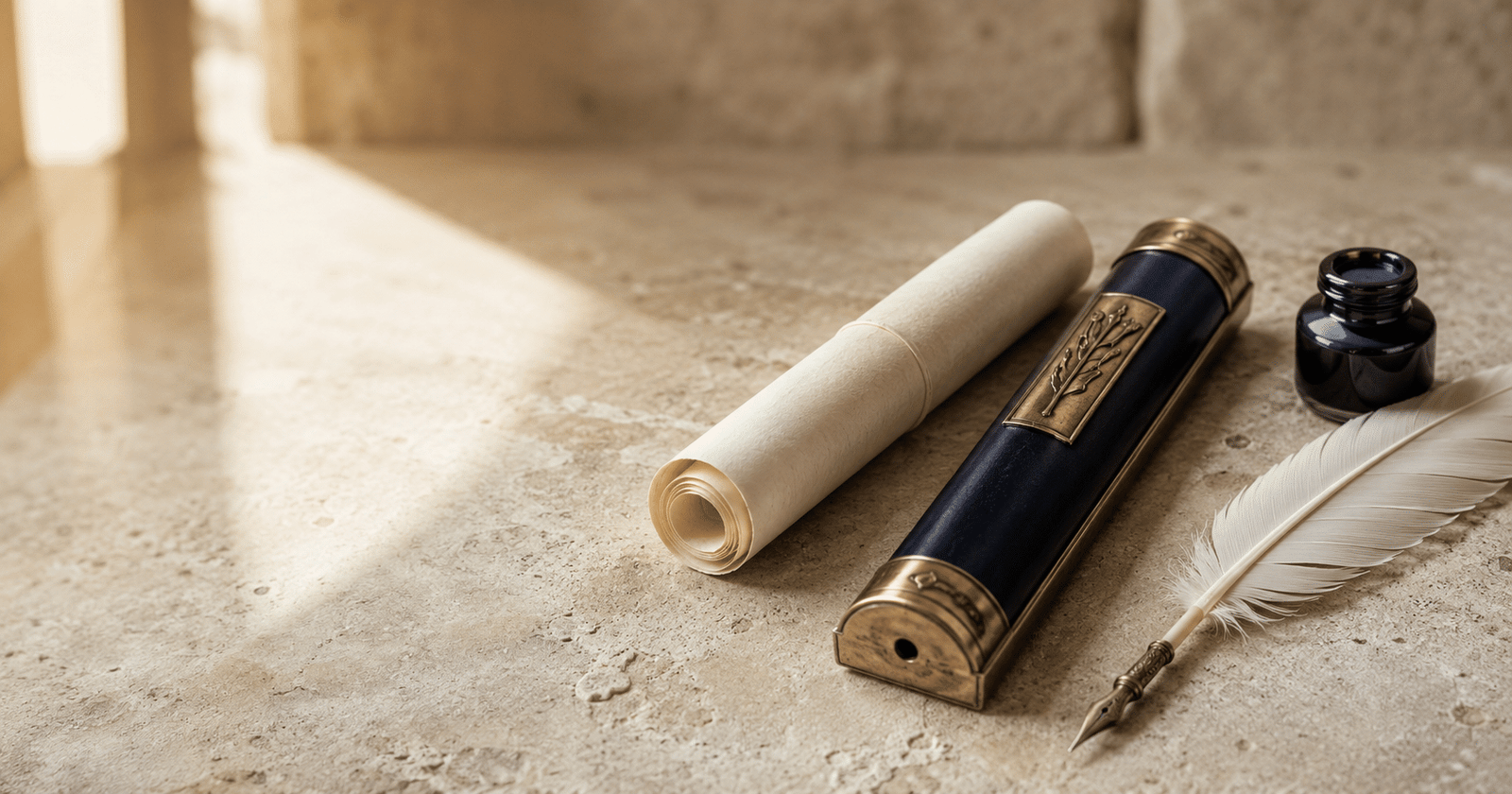
A mezuzah is a kosher parchment scroll, or klaf, on which a Sofer STaM handwrites the two passages of the Shema found in Deuteronomy 6:4–9 and 11:13–21. The scroll is rolled, protected in a case and affixed according to halakha.
The case may be beautiful and useful, but it does not fulfil the mitzvah without a valid scroll. Before considering appearance, confirm the Sofer’s identity, the parchment’s provenance and the checking process.
The parchment
The sacred material carrying the 22 handwritten lines. This is the essential part of the mezuzah.
The case
It protects the klaf. Outdoors, weather resistance and protection from heat become particularly important.
The script
The writing must follow a recognized tradition and all rules governing letter form, order and intention.
2. How should you choose the scroll size?
A larger parchment generally gives the Sofer more writing space and may make the letters easier to form and inspect. Size alone, however, does not make a mezuzah more mehudar: expert small writing can be superior to poor large writing.
| Size | Common use | What to check |
|---|---|---|
| 10 cm | Small case or interior doorway | Fine writing makes provenance and careful checking especially important. |
| 12 cm | Versatile interior format | A practical balance between size, legibility and budget. |
| 15 cm | Main entrance or a roomier format | A popular size, provided the protective case fits properly. |
| 20–25 cm | Large entrances, synagogues or institutions | A choice of presentation or hiddur that never replaces halakhic examination. |
3. Kosher, mehudar and premium quality
A. Kosher
The scroll meets the halakhic requirements: appropriate material, text written by hand in the correct order, valid letters and no disqualifying defect. “Kosher” does not necessarily mean careless or low quality.
B. Mehudar
Beyond minimum validity, one looks for high-quality klaf, regular and attractive writing, carefully made taggim and especially rigorous checking. Sofrout.com scrolls are computer-checked and then reviewed by a qualified human proofreader.
C. Mehudar א״א
At Sofrout.com this commercial designation identifies a premium selection with especially beautiful and consistent writing. Always ask what a seller’s quality labels mean in concrete terms; a label never replaces verifiable standards.

4. Which writing tradition should you choose?
Common traditions include Sephardic, Beit Yosef and Ari Zal scripts. It is preferable to follow your family or community custom. The choice is not literally “irreversible,” but it should not be improvised. If you do not know your minhag, ask your rabbi before ordering.
5. How many mezuzot should you order?
The number is not determined by the number of rooms alone. Each entrance must be assessed according to the room’s use, dimensions and doorway structure. The classic minimum often discussed is four cubits by four cubits—approximately 1.96 m × 1.96 m, or about 3.84 m² according to a commonly used contemporary measure—with separate rules for irregular spaces.
Usually relevant
Main entrance, bedrooms, living and dining rooms, kitchen and office when the conditions are met.
Exempt
Bathrooms and toilets. Other spaces may also be exempt because of their use or structure.
Needs assessment
Hallways, walk-in closets, garages, cellars, porches, balconies, arches and unusual openings.
6. Five mezuzah buying mistakes to avoid
A printout or photocopy is not a kosher mezuzah scroll. The text must be handwritten by a Sofer STaM.
Ask for traceable checking, but also require review by a qualified human examiner.
Many mezuzah cases are sold empty. Confirm exactly what the listed price includes.
A very low price should prompt questions about origin, material, the Sofer and the checks performed. A high price is not a guarantee by itself.
Find out your family or community script before ordering, without automatically declaring every other recognized tradition invalid.
7. How much should you budget?
As of July 19, 2026, the English Sofrout.com product page displays mezuzah scrolls from approximately $78 to $206, depending on size and selected quality. Prices and currency conversion can change, so consult the live product page before ordering.
Simple calculation
Number of qualifying doorways × chosen scroll price, plus cases and shipping. On a limited budget, prioritize reliable, consistently checked scrolls over expensive decorative cases.
After purchase, privately owned mezuzot should ordinarily be checked twice in seven years. Heat, humidity and outdoor exposure may justify more frequent inspection. Sofrout.com also provides a mezuzah checking service.
Need help choosing?
Tell us how many doorways you have, the desired sizes, your writing tradition and your budget. We will help you build a sensible combination.
8. Frequently asked questions
How can I tell whether a mezuzah is kosher?
It must be handwritten by a Sofer STaM on klaf prepared for the mitzvah and comply with all rules governing the text and letters. Ask about provenance and qualified human checking; computer analysis is useful but not sufficient alone.
What mezuzah size should I choose for the main entrance?
Both 12 cm and 15 cm are common, and 15 cm gives the writing more space. Size does not guarantee halakhic quality, so prioritize the actual quality of the klaf, script and checking.
How many mezuzot does an apartment need?
There is no universal number. Each opening must be assessed according to the room, its dimensions, its use and the doorway structure. Bathrooms and toilets are exempt.
Does a rental or Airbnb require a mezuzah?
In Israel, the residential obligation generally begins immediately. Outside Israel, a renter is generally obligated after thirty days, while ownership and very short stays involve different considerations. Ask about the timing and blessing in your case.
Where should a mezuzah be placed?
It is affixed to the right-hand doorpost when entering, at the lower part of the upper third. Sephardic custom places it vertically; widespread Ashkenazi custom places it on a slant. See our step-by-step installation guide.
Which mezuzah case should I choose?
The case must fit and protect the scroll without crushing it. Outdoors, use a model designed to resist water, sunlight and temperature changes.
Can a mezuzah be given as a gift?
Yes, especially for a wedding or housewarming. Confirm the recipient’s writing tradition and make sure you are giving a kosher scroll, not only a decorative case.


