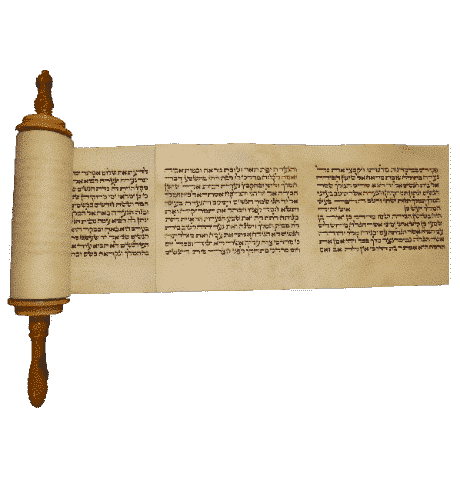


Mezuzah: The Complete Guide to Understanding, Choosing, Affixing and Checking
A mezuzah is often the first Jewish object one notices when entering a home. It is discreet, sometimes enclosed in a very simple case, yet it contains one of Judaism’s most fundamental texts: the Shema Yisrael. It accompanies the family as they enter and leave, sleep, eat and live the ordinary moments that make up a home.
Behind this apparent simplicity, however, lies a highly precise mitzvah. A mezuzah is not a decorative case or a small printed scroll. It is parchment prepared according to Halakha, handwritten by a qualified Sofer STaM with suitable ink and in an order that leaves no room for improvisation. A single missing, extra, cracked or malformed letter may affect the validity of the entire scroll.
This guide brings together what you truly need to know: the Torah source of the mitzvah, its meaning, the scroll’s contents, which doorways require a mezuzah, how it is made, how to identify a kosher scroll, Sephardic placement, pricing, checking and the most common mistakes. When a ruling depends on the exact configuration of a doorway or room, photographs and measurements should be shown to a competent rabbi or a Sofer who knows the laws of mezuzah.
Key point — The mezuzah is the parchment scroll. The case protects and may beautify it, but it can never replace a kosher scroll.

What Is a Mezuzah?
The Hebrew word mezuzah (מזוזה) originally means a doorpost. By extension, it became the name of the parchment scroll that the Torah commands us to affix to the doorposts of homes and gates.
Two passages from Deuteronomy are written on this scroll:
- Shema Yisrael and the first paragraph of the Shema, Deuteronomy 6:4–9;
- Vehaya im shamoa, the second paragraph, Deuteronomy 11:13–21.
Both passages contain the command to write these words “on the doorposts of your house and upon your gates.”1 Rambam codifies this as a positive Torah commandment: these two sections must be written on parchment and affixed at the entrance.2
In everyday language, “mezuzah” often refers to the scroll together with its case. Halakhically, however, the heart of the mitzvah is the klaf, the written parchment. An empty case, no matter how beautiful, fulfils no mitzvah. Neither does a printed or photographed reproduction.
The parchment is carefully rolled and placed inside a suitable case. The Divine Name שדי, Shaddai, traditionally appears on the outside of the rolled scroll. Yalkut Yosef also cites the traditional interpretation of these letters as an acronym for שומר דלתות ישראל, “Guardian of the doors of Israel.”3
Mezuzah, Mezuza or Mezuzot: Which Spelling Should You Use?
“Mezuzah” is the standard English spelling of מזוזה, although “mezuza” is also used. The Hebrew plural is mezuzot (מזוזות); “mezuzahs” is common in everyday English. These spelling differences do not refer to different objects.
The Torah Source of the Mezuzah
The command appears twice in the Torah, in the first two paragraphs of the Shema. The first connects the mezuzah with the unity of Hashem, love of Hashem and teaching one’s children. The second places the same mitzvah within a passage about listening to the commandments, responsibility and enduring on the Land.1
This repetition is significant. A mezuzah is not merely a sign placed outside a house. Its text speaks about what a Jew must know, love, teach and live. The doorway becomes the meeting point between these words and daily life.
The Gemara discusses the rules of writing, the form of the rolled scroll, its position and the obligation of different entrances in tractate Menachot.4 Rambam devotes two chapters to mezuzah in Hilkhot Tefillin, Mezuzah VeSefer Torah.2 The Shulchan Aruch codifies these laws primarily in Yoreh De’ah 285–291.5
A Mitzvah That Belongs to the Occupied Home
Halakha describes mezuzah as chovat hadar: the obligation rests upon the person who occupies the premises, not merely upon the owner of the walls.6 This is why a Jewish tenant may be required to affix mezuzot in a home that he or she does not own.
This principle gives the mitzvah particular depth. The mezuzah is not attached only to a building; it accompanies the Jewish use of a space. A home becomes a place where the words of the Shema are present at the thresholds of life.
Why Do Jews Put a Mezuzah on the Door?
The first answer is the simplest: because the Torah commands it. A mitzvah is not performed as a talisman or a transaction. Yalkut Yosef explains that the primary intention must be to fulfil the Creator’s will, rather than to obtain protection or reward.3
The mezuzah nevertheless carries several complementary meanings.
Declaring the Unity of Hashem
The first word visible when the parchment is unrolled is שמע, “Hear.” The text proclaims: “Hashem is our God, Hashem is One.”1 The mezuzah therefore places Divine unity at the entrance to the home. It reminds us that family life, work, possessions and personal plans are not separate from our relationship with Hashem.
Remembering as We Enter and Leave
Rambam describes encountering the mezuzah as an inner awakening. When passing it, a person remembers the unity of Hashem, love of Him and the fleeting nature of human concerns. He returns to awareness of the “Rock of the world” and regains a proper sense of direction.7
The mezuzah thus acts as a silent reminder. It does not speak, but its location means that one can hardly leave or return home without passing it.
Transmitting a Jewish Identity
The verses written in the mezuzah explicitly speak of teaching Torah to one’s children.1 The threshold of the home is therefore linked to transmission. A child who grows up surrounded by mezuzot quickly understands that a Jewish home has both a direction and a responsibility.
Touching or kissing the mezuzah when entering and leaving is a custom cited by halakhic authorities, but this gesture is not the essence of the mitzvah.8 What matters most is having a kosher mezuzah properly affixed to every doorway that requires one.
The Sofer’s perspective — A beautiful mezuzah is not judged solely by the regularity of its lines. It combines a kosher text, precise letter formation and the awareness that every word of the Shema is being written for the mitzvah.
Does a Mezuzah Protect the Home?
Jewish sources clearly associate the mezuzah with protection. The Gemara recounts the story of Onkelos: soldiers sent to arrest him saw him touch the mezuzah. He explained that a human king sits inside while his servants guard him outside, whereas Hashem allows His servants to dwell inside while He guards them from outside.9
The verse “Hashem will guard your going out and your coming in” is also connected with this idea.9 The Shulchan Aruch opens the laws of mezuzah by recalling that one who is careful with this mitzvah will see his own days and those of his children prolonged, in accordance with Deuteronomy 11:21.5
Two opposite errors must nevertheless be avoided.
The first would be to deny this dimension of protection, although it appears in the Gemara and halakhic authorities. The second would be to turn the mezuzah into an automatic amulet. Rambam sharply condemns those who add names of angels or protective formulas to the parchment: they distort a great mitzvah devoted to the unity of Hashem and turn it into a utilitarian object.10
The accurate formulation is therefore this: a mezuzah is first and foremost a mitzvah. Shemirah, protection, is associated with that mitzvah, but it does not justify neglecting practical safety or buying any scroll in the hope of a magical effect.
Key point — A mezuzah is not affixed instead of a lock, medical care or responsible conduct. It is fulfilled as a Torah mitzvah, with trust in Hashem.
What Exactly Is Written in a Mezuzah?
A mezuzah contains the first two sections of the Shema, written in order on a single parchment. The text is traditionally arranged in 22 lines, following the layout codified by the Shulchan Aruch.42 Every word, letter and space is governed by precise rules.
The Sofer writes, among other phrases:
- שמע ישראל, the declaration of Divine unity;
- ואהבת, the commandment to love Hashem;
- ושננתם לבניך, the duty to teach one’s children;
- וכתבתם על מזוזות ביתך ובשעריך, the command to write these words on the doorposts of homes and gates;
- והיה אם שמוע, the passage devoted to listening to the mitzvot and spiritual responsibility.
The Divine Name שדי is written on the back of the parchment in the location established by halakhic tradition.11 Drawings, prayers, names of angels or other texts must not be freely added to the scroll.10
Why Is a Printed Mezuzah Not Kosher?
The mitzvah requires writing. The text must be formed by a qualified Sofer on the required material and with the necessary intention. Industrial printing, photocopying, engraving or text produced by a printer does not fulfil these conditions.2
Visual similarity is therefore not enough. A printed sheet may reproduce every letter perfectly and still be entirely unfit for the mitzvah. By contrast, a genuine mezuzah bears the subtle natural variations of handwork.
How Is a Mezuzah Made?
The process begins well before the first letter. It requires suitable parchment, ink and tools, followed by writing carried out under strict rules.
1. Preparing the Parchment
The klaf comes from the hide of an animal belonging to a kosher species. It is processed for the sacred purpose for which it will be used. Preparation lishmah—specifically for the sake of the mitzvah—is an important element of its validity.12
The parchment must provide a stable, sufficiently light and even surface. If it is too thick, it will be difficult to roll; if too thin or fragile, it may split. Its quality affects both the immediate writing and the mezuzah’s resistance to time, heat and humidity.
2. Ruling the Lines
Before writing, the Sofer performs sirtut, scoring the guide lines for the text. A mezuzah must be ruled; writing without these lines invalidates it.13 The ruling is not merely a graphic convenience but one of the requirements of the writing.
3. Preparing the Ink and Quill
The text is written with durable black ink that complies with the laws of sofrut. The Sofer shapes the quill to achieve the thickness and angles required by the chosen ktav, or script tradition.
The movement must remain precise without becoming mechanical. A quill that is too broad may close an internal space; one that is too fine may produce weak or fragile strokes. The ink must adhere properly without flaking or bleeding through the parchment.
4. Writing in Order
A mezuzah must be written kesidran, in the order of the text.14 This rule has major practical consequences. If a letter is missing and the Sofer has already continued several words further, he cannot always return to complete it as he would correct an ordinary document. A late correction may invalidate the entire parchment.
This requirement explains why checking a mezuzah is not simply a matter of “proofreading at the end.” Care must accompany the writing, and the Sofer must know which corrections are permitted and which are not.
5. Forming Every Letter According to Halakha
Hebrew letters have precise structures. Certain parts must touch, while others must remain separate. A letter can become unrecognisable if a stroke is missing, if two components merge or if a crack cuts through the ink.
Some letters receive tagin, small crowns. Beauty matters in enhancing the mitzvah, but halakhic validity remains the priority. Spectacular calligraphy can never compensate for a problematic letter.
6. Proofreading and Checking
A properly produced mezuzah is examined by a qualified human proofreader. Computer-assisted checking can then detect a missing, duplicated or misplaced word with great efficiency. It is an excellent second safety net, but it cannot determine whether every letter is halakhically valid. The eye and judgement of a competent bodek remain indispensable.
At the Sofrout.com workshop, scrolls are carefully examined by a qualified proofreader and, where appropriate, by specialised computer software. To understand the work in greater detail, read Everything You Need to Know About Making a Mezuzah and about our expertise.
Common mistake — A computer report is not, by itself, an absolute certificate of kashrut. Software primarily compares textual content; it does not replace the Sofer or proofreader in judging the halakhic form of each letter.

How Can You Recognise a Kosher Mezuzah?
A buyer cannot independently verify every law of sofrut. Nevertheless, several signs of reliability can be identified and many common pitfalls avoided.
Identifiable Provenance
Yalkut Yosef stresses that a mezuzah should be purchased from a God-fearing Sofer who is meticulous in his observance. For the doorway concerned, an invalid mezuzah is equivalent to having no mezuzah at all.15 Neither price nor the appearance of a website can replace clear provenance.
Ask who wrote the scroll, which ktav was used and how it was checked. A vague phrase such as “authentic religious item” is not enough.
Genuine Handwriting
The lines will never be perfectly identical like a computer font. They display a human rhythm while remaining highly consistent. Be wary of scrolls sold at souvenir prices or supplied in industrial quantities without any information about the Sofer.
Suitable Parchment and Ink
The material must be genuine klaf prepared for sofrut. The ink must be black and stable. Faded, cracked or flaking areas require a Sofer’s opinion even if the text still appears readable.
Serious Human Checking
The statement “computer checked” is useful but incomplete. A human examination is also required. Software is excellent at counting and comparing, but it does not possess the halakhic judgement needed to assess every letter form.
A Script Consistent with Your Tradition
Common traditions include Sephardic, Beit Yosef and Ari z”l scripts. It is preferable to follow one’s family custom. If you are unsure, seek advice before buying rather than choosing on appearance alone.
For a detailed buying guide covering sizes, levels of hiddur and budgets, read How to Choose a Mezuzah.
Which Doorways Require a Mezuzah?
The answer “every door except the bathroom” is a useful starting point but is too simple to decide every case. The obligation depends on the location, its dimensions, its use and the structure of the opening.
Ordinary Living Areas
The main entrance, bedrooms, living room, dining room and kitchen normally require a mezuzah when they have a halakhically valid opening and the necessary dimensions.16 A home office used regularly generally follows the same principle.
When a house has several openings genuinely used for entering and leaving, one does not automatically rely on the front door alone. Yalkut Yosef reminds us that every qualifying entrance requires its own mezuzah.17
Bathrooms and Toilets
Toilets, bathrooms and places whose use is considered undignified are exempt.18 A mezuzah is not affixed inside these areas. Unusual arrangements—such as a multi-purpose room or a wash area divided into several zones—must be assessed according to their actual layout.
Minimum Room Size
The Shulchan Aruch uses a room measuring four amot by four amot as the reference.19 According to the approximate measure of 49 cm per amah used by the Yalkut Yosef cited in our source material, this corresponds to about 1.96 m by 1.96 m, or approximately 3.84 m²—not 2 m².20
A long narrow room, walk-in wardrobe, small pantry or space whose total area could theoretically contain such a square raises further questions. In several of these cases, a mezuzah may be affixed without a blessing.20 An approximate measurement found online should never be turned into an automatic ruling.
The Components of the Opening
A conventional doorway has two vertical posts and a lintel. The absence of a post, visible lintel or door may change its status and can sometimes lead to affixing a mezuzah without a blessing.21 An archway may require a mezuzah if its vertical sides reach the halakhically required height.22
The need for an actual door is itself disputed by Rambam and Rosh; the Shulchan Aruch rules that the opening is obligated, while the blessing may be omitted because of the doubt.23 This is why a clear photograph of the entire opening is often more useful than a long written description.
Balconies, Terraces and Enclosed Porches
The status depends in particular on the presence of a roof, the dimensions, the use and the direction of passage. For an uncovered terrace accessible only from the apartment, Yalkut Yosef discusses cases of exemption and the possibility of affixing a mezuzah without a blessing as a stringency.24 An enclosed porch used as a room is not the same case.
For more detail, see our English guide: Should a Mezuzah Be Affixed to a Balcony or Terrace Door?
Garages, Basements, Storage Rooms and Sheds
A storage area that is actively used may require a mezuzah, often without a blessing depending on its character. Yalkut Yosef specifically mentions storehouses, basements and shelters also used for storage.25 A shallow niche, a tiny cupboard and a large walk-in wardrobe must not be treated as identical cases.
Synagogues, Shops and Professional Offices
The rules depend on the residential or public use of the premises. A synagogue may require a mezuzah if it also contains living accommodation or another qualifying use; otherwise distinctions apply.26 Shops and offices are also subject to differing opinions and practices, sometimes involving placement without a blessing. A case-specific ruling should be obtained.
Caravans, Mobile Homes and Motorhomes
Mobility, temporary use and the way the space functions all affect the decision. Our French article Mezuzah in a Caravan or Motorhome presents the main cases; for an actual situation, have the dimensions and use confirmed by a rabbi.
Practical advice — Before ordering all the mezuzot for a property, photograph every opening from the front, measure any doubtful rooms and note the usual direction of movement. This simple preparation helps prevent unnecessary purchases and placement on the wrong side.
Where and How Should a Mezuzah Be Affixed?
Placement deserves a complete guide of its own. This section gives the essential principles; for illustrated steps, see How to Affix a Mezuzah.
The Right Doorpost
The mezuzah is affixed on the right as one enters the relevant space.27 At the main entrance to a home, the direction is generally obvious: it is the right-hand side when entering from outside.
Between two rooms, determining the direction can be more complex. The rooms’ principal uses, the normal route of movement and certain features of the doorway may all matter according to the various opinions. The rule cannot always be reduced to the side of the hinges. If in doubt, do not place the mezuzah “by instinct”; send a plan and photographs to a competent rabbi.
The Upper Third
The mezuzah is placed at the beginning of the upper third of the doorway’s height.28 For an opening 2.10 m high, the upper third begins at approximately 1.40 m. The mezuzah must remain within the space of the doorpost and, wherever possible, near its outer edge, within the tefach closest to the entrance.28
If a doorway is exceptionally high, or if the upper third places the mezuzah beyond normal reach and visibility, additional halakhic details must be considered. It should not be lowered arbitrarily to align with the décor.
Vertical or Slanted?
According to the Shulchan Aruch, the mezuzah is placed vertically; Rema records the Ashkenazi custom of placing it at an angle.29 A Sephardic household following Maran should therefore affix it upright. Presenting the slant as a universal rule is a common error in general online guides.
A Durable Attachment
The mezuzah must be genuinely affixed, not merely rested in place or hung insecurely.30 Screws, nails or strong adhesive suited to the surface can satisfy this requirement when they hold the case firmly. For an exterior doorway, the case must primarily protect the scroll from rain, sun and humidity.
The Blessing
Before affixing a mezuzah in a situation that requires a blessing, one recites:
Baruch Atah Ado-nai Elo-heinu Melech haolam, asher kideshanu bemitzvotav vetzivanu likboa mezuzah.
“Blessed are You, Hashem our God, King of the universe, Who has sanctified us with His commandments and commanded us to affix a mezuzah.”31
When several mezuzot are affixed consecutively in the same home, one blessing may cover all of them, provided no unrelated interruption is made between placements.32 One generally begins with the main entrance or another doorway that certainly requires a mezuzah, so that more doubtful cases can be included without multiplying blessings.
A woman is obligated in the mitzvah and may affix a mezuzah with a blessing in her home.33
When Must a Mezuzah Be Affixed in a New Home?
In Eretz Yisrael, a tenant’s obligation begins immediately. Outside Eretz Yisrael, Halakha traditionally distinguishes between a tenant, who has a thirty-day period, and a buyer, who is obligated immediately.34 Anyone wishing to affix it earlier in a particular rental situation should verify whether and how the blessing is recited.
It is incorrect to deliberately wait for a Chanukat HaBayit celebration once the obligation already applies. Yalkut Yosef states that the mezuzah should be affixed when one is genuinely preparing to live in the home, after bringing in some furniture and possessions, rather than postponing the mitzvah until the ceremony.35
The mezuzah may be affixed by day or by night.36 What matters is that it is done at the proper time and under the required conditions.
How Much Does a Mezuzah Cost?
The price of a genuine mezuzah is not the price of a piece of parchment and a few drops of ink. It reflects specialised work: preparing and ruling the surface, handwriting, concentration, drying time, proofreading, permitted corrections, human checking and, where used, computer-assisted checking.
Factors That Influence the Price
Size. A larger parchment allows letters to be more open and easier to inspect. This does not mean that a small mezuzah is automatically invalid, but writing very small letters while preserving flawless forms requires great skill.
Quality of the script. A scroll that meets the basic kosher standard and a mehudar scroll do not require the same degree of regularity, refinement and finish.
Parchment. Its preparation, stability and quality affect both cost and durability.
Checking. Serious professional proofreading takes time and carries responsibility. Dual human and computer-assisted checking, when offered, provides an additional safeguard but does not make all mezuzot identical.
Provenance. Buying directly from an identifiable workshop is not equivalent to buying an anonymous mass-imported scroll.
At the time of writing, Sofrout.com mezuzah scrolls are available in several sizes and levels of hiddur. Prices may change, so the product page remains the up-to-date commercial reference.
Should You Invest More in the Scroll or the Case?
If the budget is limited, priority should be given to the kashrut and quality of the scroll. The case should be clean, suitable and sufficiently protective. Beyond that, its material is mainly a matter of appearance and beautifying the mitzvah.
A simple case can protect an excellent mezuzah perfectly well. An expensive case can never make an invalid scroll kosher. Mezuzah cases can be viewed separately so that the protective case is not confused with the sacred parchment.
Common mistake — An extremely low price is not a bargain if the scroll is printed, written too quickly or sold without reliable provenance. For an object whose validity may depend on a single letter, anonymity is a risk, not a saving.
What Size Mezuzah Should You Choose?
Common sizes range from approximately 10 to 20 cm, with larger models available for certain entrances and institutions. The stated measurement generally refers to the height of the parchment before rolling, not necessarily the external length of the case.
A 12 cm scroll often provides a good balance for interior doors. A 15 cm mezuzah gives the Sofer more space and is especially suitable for a main entrance. Very small formats require fine writing and should not be chosen solely to fit a miniature case.
Size is not itself a level of kashrut. A 10 cm mezuzah written by an excellent Sofer can be fully kosher, while a poorly written large scroll may be invalid. Size can facilitate writing and readability; it does not replace quality.
Our guide to choosing a mezuzah compares formats, levels of finish and budgets without reducing the choice to a number of centimetres.
Kosher, Mehudar and “Alef-Alef” Mezuzot
“Kosher” means that the mezuzah meets the requirements necessary to fulfil the mitzvah. Mehudar describes a scroll that goes further in beauty and quality while, of course, remaining kosher.
In the marketplace, labels such as “kosher,” “mehudar” and “mehudar alef-alef” do not correspond to a single international standard with an official scoring system. Two sellers may use the same term for different levels. Examine concrete criteria instead: the Sofer’s identity and competence, letter quality, parchment, care in writing, tagin, proofreading and checking policy.
Beautiful writing is not merely decorative. Well-proportioned letters, controlled spacing and stable ink also make proofreading easier and reduce certain risks. But the word “mehudar” must never become an empty marketing label.
The Sofer’s perspective — Ask less, “What do you call this range?” and more, “Who wrote it, how was it checked, and may I see a clear photograph of the scroll?”
Need help choosing?
Daniel Malka, Sofer STaM, can guide you according to your tradition, the number of doorways and your budget.
When and Why Should Mezuzot Be Checked?
The Shulchan Aruch requires privately owned mezuzot to be checked twice every seven years—approximately every three and a half years. Mezuzot belonging to the public, where checking would impose a heavy burden, are checked twice every fifty years.37
This schedule is not a guarantee that the parchment will remain intact until the next date. A mezuzah exposed to sun, humidity or major temperature changes may deteriorate more quickly. It should be examined immediately if water entered the case, the parchment unrolled, the ink appears to be flaking or insects may have reached it.
What Does the Proofreader Look For?
The examination includes checking:
- that no letter or word is missing;
- that nothing has been added or repeated;
- that the letters retain their halakhically valid forms;
- that the ink has not cracked or faded;
- that two letters do not touch in a problematic way;
- that the parchment is not pierced or torn in a critical area;
- that older corrections have not deteriorated.
Computer-assisted checking compares the text and identifies certain anomalies. The human proofreader examines the physical letter forms and the actual condition of the parchment. The two approaches complement one another.
To arrange an examination, see the Sofrout.com mezuzah checking service.

What Should You Do While Your Mezuzot Are Being Checked?
Ideally, arrange the checking so that doorways remain without mezuzot for as little time as possible. A workshop may sometimes be able to provide temporary mezuzot or complete the examination quickly.
Yalkut Yosef discusses the case of mezuzot removed for checking. If one room still has a mezuzah, he recommends staying and sleeping there. If no mezuzah remains at all, one should seek a solution; however, remaining in the home is permitted when leaving would be genuinely impossible or very difficult, provided the situation is corrected as quickly as possible.38
This halakha demonstrates both the importance of the mitzvah and the need to manage real-life constraints sensibly. Do not wait until the day before a journey or holiday to remove every mezuzah from a large home.
The Most Common Mezuzah Mistakes
1. Buying a Case While Thinking You Are Buying a Mezuzah
Many product listings show an attractive case without a parchment scroll. Read exactly what is included. An empty case is not a mezuzah.
2. Buying a Printed Text
A printed scroll is invalid even if it is produced on a material resembling parchment. A mezuzah must be handwritten according to the laws of sofrut.2
3. Relying Only on Computer-Assisted Checking
Software cannot replace the proofreader’s judgement of the letters. A file marked “no textual errors” may still contain a halakhically problematic letter form.
4. Slanting Every Mezuzah in a Sephardic Home
The angled position follows the custom cited by Rema. According to Maran and Sephardic practice, the mezuzah is affixed vertically.29
5. Deciding the Right Side Too Quickly
The direction is straightforward at the main entrance. Between two rooms it may depend on several factors. The hinges alone are not a universal shortcut.
6. Using a Non-Watertight Case Outdoors
Condensation and rain can damage the ink without it being immediately visible. Exterior protection must be chosen for the actual climate, not merely for appearance.
7. Forgetting Interior Doorways
The front door is not the only entrance concerned. Bedrooms, the kitchen and other areas may each have their own obligation.17
8. Reciting a Blessing on a Clearly Exempt or Doubtful Space
For a small room, incomplete opening or doubtful use, placement without a blessing is sometimes appropriate. A blessing is not recited “just to be safe”; on the contrary, doubt about a blessing generally leads to omitting it.
9. Postponing Placement Until the Housewarming
The mitzvah begins when the obligation to live in the home begins, not on the convenient date of a celebration.35
10. Never Having the Scroll Checked
Parchment is a natural material and ink ages. Even a perfect mezuzah at the time of purchase must be checked according to the halakhic schedule and earlier after an incident.37
FAQ: 36 Frequently Asked Questions About Mezuzah
Click a question to display the answer.
1. Which Part Is Actually Sacred: the Case or the Scroll?
The written parchment contains the Names of Hashem and fulfils the mitzvah. The case protects and beautifies it. A case containing the scroll must be treated with respect.
2. Can a Printed Mezuzah Be Used?
No. It must be handwritten by a qualified Sofer on suitable parchment and with the required intention.2
3. Can a Very Cheap Mezuzah Be Kosher?
Price alone does not determine validity, but a price incompatible with hours of handwork, parchment preparation and checking should raise concern. Always ask for identifiable provenance.
4. What Is the Best Size for a Front Door?
A 15 cm scroll is often appreciated for its readability and level of hiddur. It is not an obligation: the actual quality of the writing matters more than size.
5. What Size Should Be Chosen for Bedrooms?
A 12 cm scroll is a common, well-balanced format. A different size may be suitable if the ktav is carefully written and the case protects the scroll properly.
6. Does a Kitchen Require a Mezuzah?
Yes. An ordinary kitchen that meets the relevant size and doorway requirements requires a mezuzah.39
7. Does a Bathroom Require a Mezuzah?
No. Bathrooms and toilets are exempt because of their use.18
8. Does an Opening Without a Door Require a Mezuzah?
The issue is disputed. According to the Sephardic ruling presented in Yalkut Yosef, several configurations may require a mezuzah without a blessing.23 Have the opening assessed.
9. Does an Archway Require a Mezuzah?
It may require one if it has sufficiently high vertical sides before the curve and meets the other conditions.22
10. Does a Balcony Require a Mezuzah?
It depends on the roof, dimensions, use and direction of entry. Many open balconies are exempt; in some cases a mezuzah is affixed without a blessing.24
11. Does a Walk-In Wardrobe Require a Mezuzah?
A large walk-in wardrobe may require one. A small cupboard generally does not. Its dimensions and use must be measured.
12. Does a Garage Require a Mezuzah?
Depending on its use, dimensions and relationship with the home, it may require one, often without a blessing. A case-specific assessment is preferable.25
13. Must a Tenant Affix Mezuzot?
Yes, because mezuzah is an obligation upon the occupant. The timing differs in particular between Eretz Yisrael and the Diaspora.34
14. When Must a Tenant Affix Mezuzot in Israel?
The tenant is obligated as soon as the home is actually occupied. One does not wait thirty days.34
15. May a Mezuzah Be Affixed at Night?
Yes. Yalkut Yosef states that there is no difference between day and night for affixing a mezuzah.36
16. May a Woman Affix a Mezuzah?
Yes. She is obligated in the mitzvah and may affix it with a blessing when the situation requires a blessing.33
17. May a Child Affix a Mezuzah?
The laws concerning a minor’s education contain further details, including what happens when the child reaches majority. For the family mezuzah, it is preferable for an adult obligated in the mitzvah to perform the placement.40
18. Which Blessing Is Recited?
The blessing ends with likboa mezuzah, “to affix a mezuzah.”31 It is recited immediately before placement and only when halakhically required.
19. Is a Separate Blessing Recited for Every Doorway?
Not when several mezuzot are affixed consecutively in the same home without an unrelated interruption. One blessing may cover them all.32
20. On Which Side Is the Mezuzah Affixed?
On the right in the direction of entry.27 Between two rooms, the halakhic direction may need to be determined with a rabbi’s help.
21. At What Height Should It Be Affixed?
At the beginning of the upper third of the opening, within the placement parameters set by Halakha.28
22. For Sephardim, Should the Mezuzah Be Vertical or Slanted?
Vertical, in accordance with the Shulchan Aruch. Rema records the angled custom for Ashkenazim.29
23. May Double-Sided Adhesive Be Used?
Yes, if it creates a firm and durable attachment on that particular surface. Weak, temporary adhesive or tape that releases in heat is not suitable.30
24. May the Mezuzah Be Placed Inside the Doorframe?
It must be affixed within the halakhic space of the doorpost, as close as possible to the outside of the entrance under the placement rules.28 Unusual moulding or framing may require a photograph.
25. Must the Letter Shin Be Visible?
The Divine Name שדי is traditionally written on the back of the parchment.11 A window in the case is not required for validity; protecting the scroll remains the priority.
26. May You Open a Mezuzah Yourself?
It is best not to unroll the parchment unnecessarily. Inexpert handling can crack the ink or the klaf. Entrust examination to a Sofer.
27. How Often Must Mezuzot Be Checked?
For a private home, twice in seven years—approximately every three and a half years—and immediately after an incident or suspicious exposure.37
28. Is Computer-Assisted Checking Sufficient?
No. It is extremely effective at detecting many textual errors, but the halakhic form of the letters requires a qualified human proofreader.
29. What Should Be Done If a Mezuzah Falls?
Do not leave it on the floor. Check whether the case or parchment has been damaged, then ask whether a blessing is required when it is reaffixed. The answer depends on the delay and circumstances.
30. What Should Be Done If Water Entered the Case?
Remove it respectfully and have the parchment checked promptly. Do not use heat to dry the ink and do not rub it.
31. May Only the Case Be Replaced?
Yes, provided the parchment is handled carefully. If its condition is doubtful or it has not been checked for a long time, take the opportunity to have it examined.
32. May a Mezuzah Be Given as a Gift?
Yes, especially for a wedding or new home. Check the recipient’s script tradition and state clearly whether the gift includes the parchment, the case or both.
33. May Mezuzot Be Taken Down When Moving Home?
When the next occupant is Jewish, removing them is generally forbidden; reimbursement or replacement can be arranged. Different rules apply if the premises will be occupied by a non-Jew or the mezuzot are at risk of desecration.41 See our French guide to removing mezuzot when moving.
34. Does a Caravan Require a Mezuzah?
It depends on whether it functions as a stable residence, how long it is used and its configuration. See the French guide to caravans and motorhomes.
35. Why Do People Kiss the Mezuzah?
It is a custom that expresses attachment to the mitzvah and reminds a person of Hashem when entering and leaving.8 The gesture does not replace having a kosher parchment.
36. Whom Should You Contact About a Complicated Doorway?
Consult a rabbi competent in the laws of mezuzah or a Sofer able to examine measurements and photographs. Photograph the opening from both sides, including the ceiling, posts and adjoining rooms.
Choose Carefully Today and Remain Vigilant Tomorrow
The mezuzah connects an ancient text with a daily act. It proclaims the unity of Hashem, marks the Jewish home and reminds every person, when leaving and returning, of the direction in which life should be oriented.
Fulfilling the mitzvah correctly requires three forms of care. First, choose a scroll whose provenance, writing and checking are reliable. Second, determine which doorways require one and how it should be affixed. Finally, remember that parchment ages and must eventually be examined again.
Sofrout.com is a sofrut workshop in Israel directed by Daniel Malka, a Sofer STaM certified by the Mishmeret STaM Institute. Mezuzot are written or prepared with close attention to Halakha, then checked by a person and, where applicable, by specialised software.
Continue with these resources:
- How to choose a mezuzah scroll
- How to affix a mezuzah step by step
- Mezuzah checking service
- Available mezuzah scrolls
- Contact Daniel
Ready to Equip Your Home?
Choose a mezuzah scroll or ask Daniel directly about your doorways and family tradition.
Halakhic note — This guide presents general principles with priority given to Sephardic practice according to Maran and the cited rulings of Yalkut Yosef. Any unusual doorway, room or property configuration should be submitted to a competent rabbi.
Torah Sources
- Torah, Deuteronomy 6:4–9 and 11:13–21. ↩︎
- Rambam, Mishneh Torah, Hilkhot Tefillin, Mezuzah and Sefer Torah 5:1–4. ↩︎
- Yalkut Yosef, Sova Semachot, vol. I, Chuppah VeKiddushin, p. 525; supplied “Hilkhot Mezuzah” file, siman 285, §1. ↩︎
- Babylonian Talmud, Menachot 32b–34a. ↩︎
- Shulchan Aruch, Yoreh De’ah, siman 285. ↩︎
- Babylonian Talmud, Pesachim 4a; Shulchan Aruch, Yoreh De’ah 291:2. ↩︎
- Rambam, Mishneh Torah, Hilkhot Tefillin, Mezuzah and Sefer Torah 6:13. ↩︎
- Rema on Shulchan Aruch, Yoreh De’ah 285:2; Yalkut Yosef, supplied “Hilkhot Mezuzah” file, siman 285, §4. ↩︎
- Babylonian Talmud, Avodah Zarah 11a. ↩︎
- Rambam, Mishneh Torah, Hilkhot Tefillin, Mezuzah and Sefer Torah 5:4. ↩︎
- Shulchan Aruch, Yoreh De’ah 288:15. ↩︎
- Rambam, Mishneh Torah, Hilkhot Tefillin, Mezuzah and Sefer Torah 1:11; Shulchan Aruch, Orach Chaim 32:8. ↩︎
- Babylonian Talmud, Menachot 32b; Shulchan Aruch, Yoreh De’ah 288:8. ↩︎
- Babylonian Talmud, Menachot 32b; Shulchan Aruch, Yoreh De’ah 288:3. ↩︎
- Yalkut Yosef, Sova Semachot, vol. I, Chuppah VeKiddushin, p. 528; supplied “Hilkhot Mezuzah” file, siman 285, §2. ↩︎
- Rambam, Mishneh Torah, Hilkhot Tefillin, Mezuzah and Sefer Torah 6:7–9; Shulchan Aruch, Yoreh De’ah 286. ↩︎
- Yalkut Yosef, supplied “Hilkhot Mezuzah” file, siman 285, §16, p. 543. ↩︎
- Shulchan Aruch, Yoreh De’ah 286:4–5. ↩︎
- Shulchan Aruch, Yoreh De’ah 286:13. ↩︎
- Yalkut Yosef, supplied “Hilkhot Mezuzah” file, siman 285, §23–25, pp. 546–550. ↩︎
- Yalkut Yosef, supplied “Hilkhot Mezuzah” file, siman 285, §17–21, pp. 543–546. ↩︎
- Rambam, Mishneh Torah, Hilkhot Tefillin, Mezuzah and Sefer Torah 6:4; Shulchan Aruch, Yoreh De’ah 287:2. ↩︎
- Rambam, Mishneh Torah, Hilkhot Tefillin, Mezuzah and Sefer Torah 6:1; Shulchan Aruch, Yoreh De’ah 286:15; Yalkut Yosef, supplied “Hilkhot Mezuzah” file, siman 285, §27, p. 551. ↩︎
- Yalkut Yosef, supplied “Hilkhot Mezuzah” file, siman 285, §32, p. 555; Yabia Omer IV, Yoreh De’ah 23; Yechaveh Da’at IV, 51. ↩︎
- Yalkut Yosef, supplied “Hilkhot Mezuzah” file, siman 285, §28–30, pp. 551–553. ↩︎
- Shulchan Aruch, Yoreh De’ah 286:3 and 10–11. ↩︎
- Babylonian Talmud, Menachot 34a; Shulchan Aruch, Yoreh De’ah 289:2. ↩︎
- Babylonian Talmud, Menachot 33a; Shulchan Aruch, Yoreh De’ah 289:2. ↩︎
- Shulchan Aruch and Rema, Yoreh De’ah 289:6. ↩︎
- Shulchan Aruch, Yoreh De’ah 289:4. ↩︎
- Shulchan Aruch, Yoreh De’ah 289:1. ↩︎
- Shulchan Aruch, Yoreh De’ah 289:1 and commentaries ad loc. ↩︎
- Babylonian Talmud, Kiddushin 34a; Yalkut Yosef, supplied “Hilkhot Mezuzah” file, siman 285, §14, p. 536. ↩︎
- Babylonian Talmud, Menachot 44a; Shulchan Aruch, Yoreh De’ah 286:22. ↩︎
- Yalkut Yosef, supplied “Hilkhot Mezuzah” file, siman 285, §8, p. 532; Halikhot Olam VIII. ↩︎
- Yalkut Yosef, supplied “Hilkhot Mezuzah” file, siman 285, §9, p. 534. ↩︎
- Babylonian Talmud, Yoma 11a; Shulchan Aruch, Yoreh De’ah 291:1. ↩︎
- Yalkut Yosef, supplied “Hilkhot Mezuzah” file, siman 285, §11, p. 535; Yabia Omer III, Yoreh De’ah 18:3. ↩︎
- Yalkut Yosef, supplied “Hilkhot Mezuzah” file, siman 285, §31, p. 555. ↩︎
- Yalkut Yosef, supplied “Hilkhot Mezuzah” file, siman 285, §15, p. 538; Yalkut Yosef, Dinei Chinuch Katan, p. 313. ↩︎
- Babylonian Talmud, Bava Metzia 102a; Shulchan Aruch, Yoreh De’ah 291:2. ↩︎
- Shulchan Aruch, Yoreh De’ah 288:11. ↩︎